Given Canada’s massive size and diverse physical geography, temperatures can vary greatly across the country. Canadian winters can be harsh in many regions, with temperatures ranging between -15°C (5°F) and -30°C (-22°F) in the interior and Prairie provinces. Coastal regions, particularly in British Columbia, experience much milder winters due to oceanic influence.
Summers in Canada are generally warm, with temperatures ranging between 20°C (70°F) and 30°C (86°F). In some areas, temperatures may occasionally exceed 40°C (104°F). Overall, Canada experiences four distinct seasons every year.
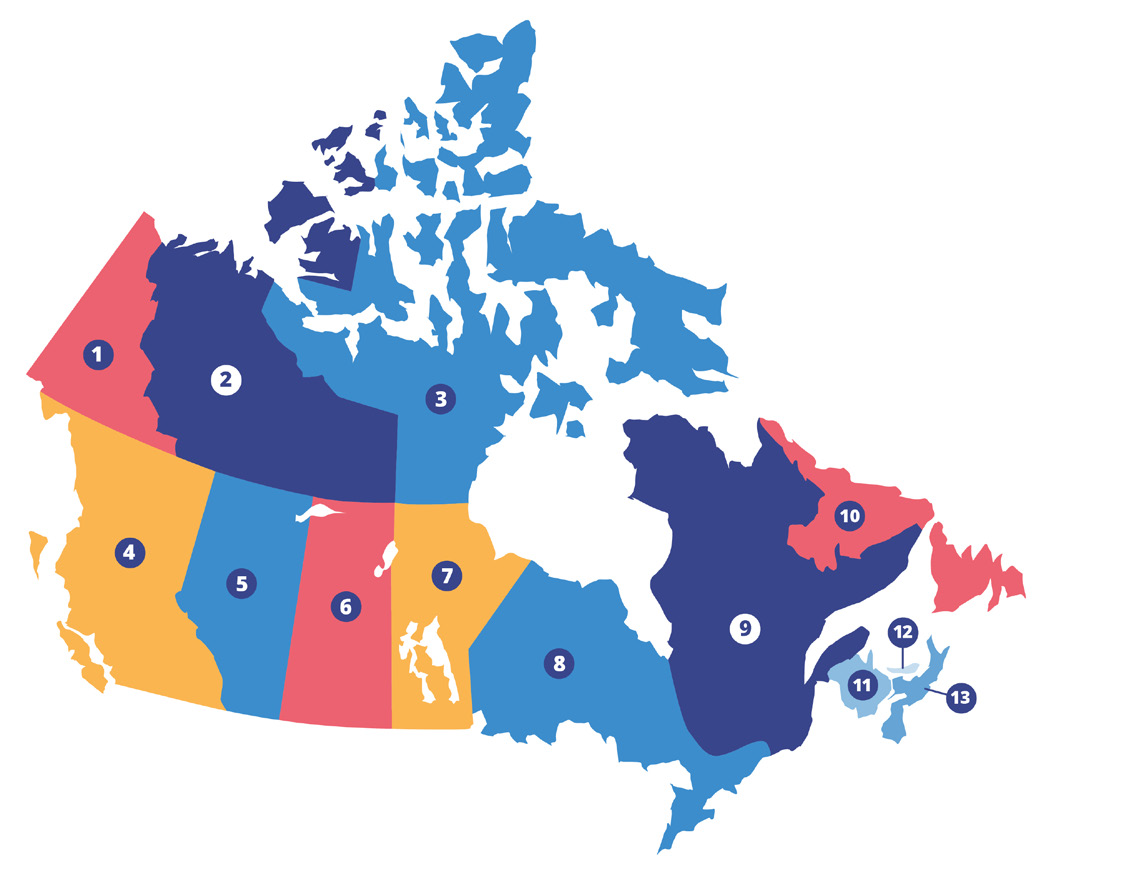
1. Yukon
2. Northwest Territories
3. Nunavut
4. British Columbia
5. Alberta
6. Saskatchewan
7. Manitoba
8. Ontario
9. Quebec
10. Newfoundland and Labrador
11. New Brunswick
12. Prince Edward Island
13. Nova Scotia
🌦️ Canadian Weather During the Four Seasons
| Season | Months | Weather Condition |
|---|---|---|
| Summer | June – August | Warm to hot weather with daytime temperatures between 20°C–30°C or higher. |
| Fall / Autumn | September – November | Cooling temperatures with frequent rainfall. Light jackets and raincoats are common. |
| Winter | December – February | Extremely cold temperatures with snowfall. Heavy winter clothing is essential. |
| Spring | March – May | Mild and pleasant days with cooler mornings and evenings. |
🌍 Province-Wise Climate in Canada
🏔️ Yukon
Yukon has a cold and dry climate. Winters are long and extremely cold, while summers are short and cool.
❄️ Northwest Territories
Subarctic climate with long, cold winters and short, mild summers.
🧊 Nunavut
One of the coldest regions in Canada, with extremely cold winters and very short summers.
🌲 British Columbia
The mildest climate in Canada. Coastal regions experience rainy winters and warm summers.
🏞️ Alberta
Cold winters and warm summers. Chinook winds can cause sudden winter warm spells.
🌾 Saskatchewan
Dry continental climate with hot summers and very cold winters.
🌬️ Manitoba
Extreme temperature variation with hot summers and freezing winters.
🏙️ Ontario
Humid continental climate with warm summers and snowy winters.
🍁 Quebec
Cold, snowy winters and warm, humid summers. Spring and fall are short.
🌊 Newfoundland and Labrador
Cool summers and cold, windy winters. Coastal fog is common.
🌧️ New Brunswick
Moderate climate with cold winters and mild summers.
🌾 Prince Edward Island
Cool summers and cold winters influenced by surrounding ocean waters.
🌊 Nova Scotia
Mild but unpredictable climate with frequent rainfall.
Pro Tip:
Travelling to Canada?
Plan for the weather! Canada does not always have snow — summers can be very hot, reaching up to 40°C (104°F) in some regions.