

Updated: 23 October 2026
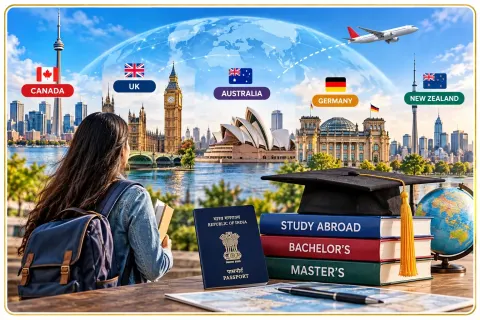
Top 5 countries to Study Abroad
Choosing the right country for a bachelor's or master's degree has become more than comparing university rankings and tuition fees. Indian students must also consider student visa requirements, proof of funds, post-study work opportunities, language requirements, housing costs and the risk of visa refusal.
For the 2026–2027 intake, Germany, Australia, the United Kingdom, Canada and New Zealand are five countries worth considering. However, the best destination depends on the student's academic background, budget, chosen course and long-term career plans.
A key point: visa rules and post-study work policies can change during an academic year. Meeting a university's admission requirements does not automatically guarantee a visa, and post-study work permission is not the same as permanent residency.
Top 5 countries for Indian students in 2026–2027

1. Germany
Germany is worth considering for students interested in engineering, technology, research, science and selected business programmes. Many public universities charge no general tuition fee, although exceptions and semester contributions apply.
-
Bachelor's: Check whether your Indian school qualification provides direct entry or requires a preparatory route.
-
Master's: A relevant bachelor's degree and programme-specific prerequisites are commonly required.
-
Financial rule: Official guidance lists at least €11,904 in a blocked account for 2026, unless an accepted alternative applies.
-
Main challenge: German-language ability can be essential for many degrees and jobs.
Best for: Students prioritising lower tuition costs and willing to learn German.

2. Australia
Australia offers a wide selection of bachelor's and master's programmes in business, IT, engineering, healthcare and other professional fields.
-
Bachelor's: Academic results and English-language requirements depend on the institution.
-
Master's: Check whether your previous degree meets the programme's entry conditions.
-
Visa rules: Applicants must satisfy the Genuine Student requirement and provide financial evidence when required.
-
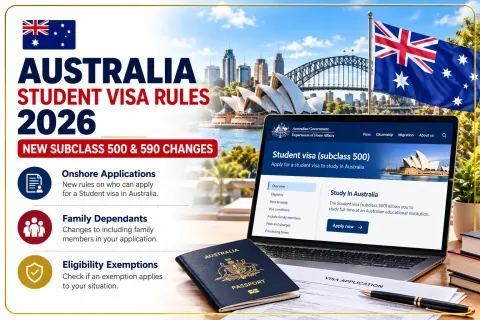
2026 change: Student visa rules changed from 2 October 2026, including rules about where most applications must be lodged. The official visa page should be checked before applying @ Immigration and citizenship Website
Best for: Students with a realistic budget and a clear academic and career plan.

3. United Kingdom
Many UK master's programmes can be completed in one year, which may reduce the time spent paying for accommodation and other living expenses compared with longer degrees.
-
Bachelor's: Usually takes three or four years, depending on the course and location.
-
Master's: Many taught master's degrees take one year.
-
Financial rule: The current official guidance lists maintenance funds of £1,529 per month in London or £1,171 outside London, for up to nine months, subject to the rules applicable to the applicant.
-
Important 2027 rule: The Graduate visa is due to last 18 months for applications made on or after 1 January 2027, rather than two years. Doctoral graduates can qualify for three years.
Best for: Students seeking a recognised degree with a relatively short master's study period.

4. Canada
Canada remains an option for students who carefully select an eligible institution and programme, particularly those considering professional, technical and research-oriented qualifications.
-
Bachelor's: Verify the institution's designated status, programme requirements and study-permit documentation.
-
Master's: From 1 January 2026, applicants to master's or doctoral degree programmes at public institutions generally do not need a provincial or territorial attestation letter (PAL/TAL), although Quebec has separate requirements.
-
Strict screening: Study-permit caps affect many applicants, and financial sufficiency and genuine study intentions remain important.
-
Work after graduation: A post-graduation work permit is not automatic; programme, institution and individual eligibility rules apply.
Best for: Students who have checked current study-permit conditions and post-graduation eligibility before paying deposits.

5. New Zealand
New Zealand is worth exploring for students who prefer a smaller education market, English-medium study and potential opportunities in eligible skilled occupations.
-
Bachelor's: Entry requirements vary by institution and qualification.
-
Master's: Check academic prerequisites, programme recognition and career relevance.
-
Financial rule: Immigration New Zealand lists NZD $20,000 per year for living costs for tertiary students studying for a year or longer, or NZD $1,667 per month for shorter study.
-
Main challenge: Tuition, travel and living costs still need to be funded independently of any expected part-time income.
Best for: Students looking for an English-speaking alternative and a carefully planned study-to-work pathway.
Comparison: Which country is right for you?
|
Factor |
Germany |
Australia |
UK |
Canada |
New Zealand |
|---|---|---|---|---|---|
|
Tuition budget |
Often lower at public universities |
Medium to high |
Medium to high |
Medium to high |
Medium to high |
|
English-taught options |
Available; varies by course |
Extensive |
Extensive |
Extensive |
Extensive |
|
Master's duration |
Often 1–2 years |
Often 1–2 years |
Often 1 year |
Often 1–2 years |
Often 1–2 years |
|
Main visa consideration |
Funds, admission, language where required |
Genuine Student assessment, funds |
Maintenance funds and visa conditions |
Study permit rules, funds, eligible institution |
Funds, admission, genuine study purpose |
|
Post-study work |
Eligible graduates may qualify to seek work |
Eligibility and visa duration depend on current rules |
Graduate visa rules are changing in 2027 |
PGWP eligibility depends on current criteria |
Eligibility depends on qualification and current rules |
These are general comparisons, not guarantees. Course length, fees, visa requirements and post-study rights vary by programme, qualification, location and application date.
Strict student visa guidelines for Indian applicants in 2026–2027
Regardless of the destination, prepare your application carefully before submitting it.
1. Show genuine and traceable funds
Provide the required bank statements, education-loan documents, sponsor evidence and source-of-funds records. Avoid unexplained large deposits or borrowed funds that cannot be properly documented.
2. Explain your course selection
Your chosen degree should make sense in light of your previous education, employment, skills and career objectives. Explain any significant study gaps or change of field honestly.
3. Verify the institution and qualification
Check that the institution and course meet the destination's current visa and post-study work requirements. Admission to a private college does not necessarily provide the same benefits as admission to an eligible public university.
4. Meet English or other language requirements
Take IELTS, PTE, TOEFL or another accepted test if required. Germany may require German-language proficiency for certain programmes.
5. Do not rely on part-time work to finance your entire degree
Prepare a realistic budget covering tuition, accommodation, food, transport, insurance and emergency expenses before travelling.
6. Check the rules on your actual application date
Financial thresholds, application procedures, dependant permissions and post-study work arrangements can change. Use official immigration sources rather than relying only on an agent's advice or an older blog post.
Official immigration and student resources
Use these government websites to verify the requirements for your intended intake.
-
Germany: Study visa and residence information
-
Australia: Student visa subclass 500
-
United Kingdom: UK Student visa and Graduate visa
-
New Zealand: Fee Paying Student Visa
Frequently asked questions
1. Which is the cheapest country for Indian students?
Germany is often among the more affordable options because many public universities have low or no general tuition fees. However, living expenses, semester contributions, programme fees and proof-of-funds requirements still apply.
2. Which country is best for a one-year master's degree?
The UK is a strong option because many taught master's degrees take one year. Compare the total cost and the applicable Graduate visa rules for your expected graduation and application dates.
3. Is Canada still a good option for Indian students?
It can be, but applicants should check the current study-permit requirements, institution and programme eligibility, financial evidence and post-graduation work-permit rules before committing.
4. Can I get permanent residency after studying abroad?
A degree does not guarantee permanent residency in any of these countries. Eligibility depends on future employment, immigration programmes, language ability, points or other applicable criteria, and the rules in force when you apply.
5. Should I choose a bachelor's or master's degree abroad?
Choose based on your existing qualifications, career objectives and financial capacity. A master's degree may be more appropriate if you already hold a recognised bachelor's degree and meet the programme's prerequisites.
Final recommendation form choose Top 5 countries to Study Abroad
For Indian students planning a 2026–2027 intake, Germany is worth exploring for affordability, Australia for English-medium study, the UK for shorter master's programmes, Canada for carefully selected eligible programmes, and New Zealand as another English-speaking option.
Do not choose a country based only on the promise of a visa or permanent residency. Compare the actual course, total cost, immigration rules and career prospects before paying a deposit.
Disclaimer: This article provides general educational information as of 23 October 2026. Immigration policies and financial thresholds can change. Always verify the rules on the relevant government's official website before making an application.
Leave a Comment